
- News
- City News
- kochi News
- In this drear park, the doe are dying
Trending
This story is from June 23, 2018
In this drear park, the doe are dying
The spotted deer with wobbly hind legs tried to stand up but collapsed into the slush. After a while, it tried to get up again, this time managing an awkward position, tilting its head backwards as if to balance the anaemic frame. It struggled to move to a drier place, repeating the wobbly walk and collapse. A little ahead, over 100 of them huddled under the shades of trees for respite from the lashing rains.At the Tripunithura Hill Palace deer park, death seem to be lurking around in every corner.
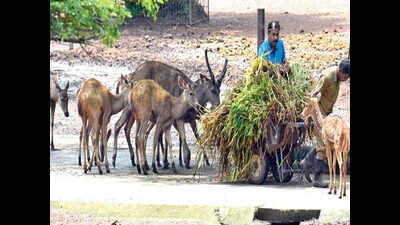
Desperate deer huddle together to eat jackfruit leaves as the park stopped feeding grass from Friday. Park employees remove bundles of grass as they suspect that the deer died due to some infection spread from the fodder
A little ahead, over 100 of them huddled under the shades of trees for respite from the lashing rains.

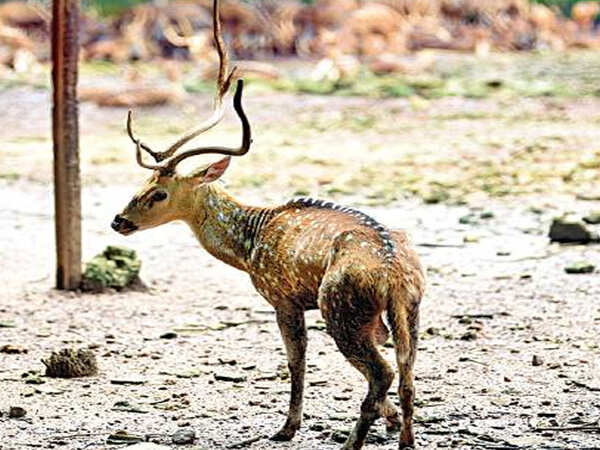
At the Tripunithura Hill Palace deer park, death seem to be lurking around in every corner. The gentle creatures are dying a painful death almost every other day, even as authorities watch helplessly.
The death count so far is 11, and authorities admit they do not know the reason for these sudden deaths. To house them in the enclosure was a disaster, a fact they won't acknowledge.
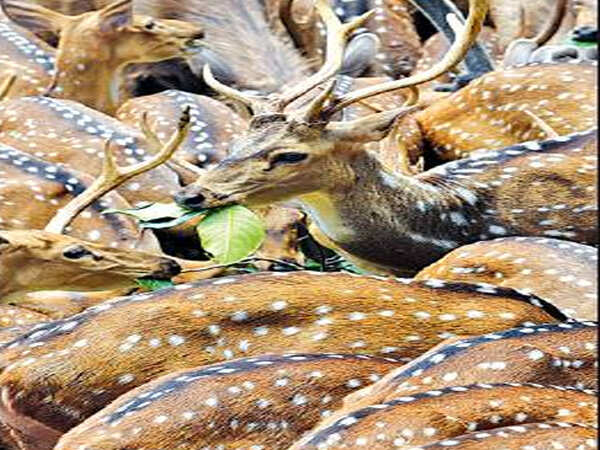
The park has 230 spotted deer, including stags, doe and fawns and around 40 sambar deer. The population density is unsustainable since the park is only 2.5 acres, a barren ground with not even a blade of grass. The place resembles a cattle market than a deer park.
At the centre of the park, there is a ramshackle shed where bundles of grass are stacked. Around 40 workers, including women, have the dual responsibility of tending the park and the sprawling museum premises. A major issue is maintaining the hygiene.The deer park was established in 1992, an attraction for visitors coming to the museum. In initial months, there were just around 10 deer and they had enough space to roam around. But their numbers kept growing and by 2018 it touched 270.
"The females can conceive within two weeks to four months. It is important that they are sterilized or shifted to other parks,'' said a senior forest official with Periyar Tiger Reserve.
The animals showed symptoms of sickness with the onset of monsoon. "We still do not know the exact reason and samples have been send to the animal husbandry department," a museum official said.
"We are still in the dark, but unless three fourth of them are shifted from here we will see more deaths,'' he said. The Centre for Heritage, which manages the museum and the park incurs Rs 30 lakh annually for the upkeep of deer alone.
"The funds should have ideally used to upgrade the infrastructure of the museum and the deer need to be shifted from the park if their survival is to be ensured,'' an official said.
Dr Venu V, principal secretary, cultural affairs (archaelogy, archives, museums), said he would look into the issue and find a solution in the coming days.

About the Author
Viju BEnd of Article
FOLLOW US ON SOCIAL MEDIA






Photostories
Hot Picks
TOP TRENDING
Popular Categories
Hot on the Web
Top Trends
Hurricane MiltonRatan Tata NewsNew UPI Transaction LimitRatan Tata DiesPM ModiRafael NadalShantanu NaiduTom BradyStock Market TodayNarayana MurthyEngland Cricket Team New RecordRatan Tata Inspiring QuotesManagement Colleges of IndiaTop Medical Colleges of IndiaTop Engineering Colleges of IndiaTop Pharmacy Colleges of IndiaLive Cricket Score
Trending Topics
Diwali WishesBigg Boss Tamil 8 Contestants ListDussehra WishesVettaiyan Twitter ReviewSanjay Leela BhansaliVettaiyan ReviewSalman KhanDevara CollectionBigg Boss 18Deepika PadukoneShraddha KapoorRatan Tata Passed AwayColdplayVettaiyan Movie ReviewSwatantrya Veer SavarkarDussehra 2024Watch NFL Live StreamDress To ImpressRatan Tata DeathWordle Answer
Living and entertainment
Latest News
All-Star Tower Defense (ASTD) Codes October 2024Ranveer Singh: I have a man crush on Tiger ShroffWho is Noel Tata? Meet Ratan Tata’s half-brother, who could be successor at Tata TrustsHow to make Ginger Turmeric Shots for seasonal changeWhen Amitabh Bachchan slept on Marine Drive with rats as neighbours: I didn’t have a place to stayEthel Kennedy, widow of Senator Robert F Kennedy Sr suffers stroke in sleep, hospitalised'Stree 2' hits OTT after record-breaking box office success: Here’s where to watch!Da Hood Codes October 2024: Unlock new weapons to elevate your gameplayTriple centurion Harry Brook happy to break Dad's club record'Thalapathy 69': Here's how much Vijay will be earning in his last film!Happy Dussehra 2024: Top 50 Wishes, Messages, and Quotes to Share with Your Loved OnesHow The Tarot Suit Can Be Associated With The Elements'You're drunk': Britons stunned by BBC app's shocking 18,995 mph wind forecast!Hanging Lights For Living Room: Transform and Illuminate Your SpaceArko: The reach of Bollywood is greater than single albumsExclusive- Iss Ishq Ka Rab Rakha fame Shalini Kapoor Sagar on celebrating Navratri festivities says, "We will be shooting the Durga Puja track soon"Leaders of 24 countries, UN chief to attend BRICS summit: KremlinOnly a true creative genius can spot the odd unicorn in 12 seconds!
Copyright © 2024 Bennett, Coleman & Co. Ltd. All rights reserved. For reprint rights: Times Syndication Service